Browsed by
Tag: God

Nip It in the Bud

Nip It in the Bud

Nip It in the Bud--plant with flowers and buds“Nip it in the bud. Just nip it in the bud.” Barney Fife on The Andy Griffith Show said that over and over. We laughed at Barney’s many messes. However, he did get a few things right.

We often need to nip it in the bud.

 We want to:

  • Stop something at an early stage
  • Prevent a problem before it happens
  • End a problem before it gets bigger

Taking action now may prevent regret later. Better safe than sorry.

If we don’t want a flower to bloom, we nip it in the bud.

We cut or break off the bud before it blooms. Sometimes, cold weather nips a flower in the bud.

Like flowers, some situations need nipping. To prevent problems or danger:

  • Parents punish their children’s bad behaviors.
  • Bosses fire lazy workers.
  • We quit bad habits.

Whether we nip buds or let them bloom, we can trust the Creator of them all. 

Also, with God’s help, we can always bloom where we’re planted.

“Though the fig tree does not bud and there are no grapes on the vines, though the olive crop fails and the fields produce no food, though there are no sheep in the pen and no cattle in the stalls, yet I will rejoice in the Lord, I will be joyful in God my Savior” (Habakkuk 3:17-18 NIV).

Do you have an expression you want explained or a thought about this one? If so, please comment below.

Subscribe to receive my weekly posts by email and receive a free copy of “Words of Hope for Days that Hurt.”

If you enjoyed this post, please share it with your friends.
Watershed Moment

Watershed Moment

Watershed Moment: Pacific Ocean, Hwy 101The first time I saw the ocean was a watershed moment.

I realized:

  • I love to travel (especially to places off the beaten path).
  • God created an amazing world.
  • The world has more to see than I can imagine.

A watershed moment is a turning point.

It involves a:

  • Time of discovery
  • Moment of change
  • Dividing point

This expression comes from geography. According to Merriam-Webster, a watershed is “a ridge of land separating rivers and streams flowing in one direction from those flowing in the opposite direction.” It may also include the area where the divided water flows.

Watershed moments in history include:

  • Discovery of electricity
  • Invention of the telephone
  • Beginning of space travel
  • Travel by automobile

The greatest watershed moment occurred when God came to earth as a man.

Jesus did no wrong. Yet, He paid the price for our wrongs. He:

“Here is a trustworthy saying that deserves full acceptance: Christ Jesus came into the world to save sinners” (I Timothy 1:15 NIV).

What was a watershed moment for you? Please comment below.

Thanks to Timothy Lewis for the suggestion.

Subscribe to receive my weekly posts by email and receive a free copy of “Words of Hope for Days that Hurt.”

If you enjoyed this post, please share it with your friends.

Up a Stump

Up a Stump

Up a Stump--stump I always thought up a stump meant the same as stumped. My friend Patty Cooper Emerson explained a difference in the two.
Stumped means confused or puzzled.

We cut a few trees in our back year. I was stumped about what to do with the stumps. Should I:

  • Dig them up
  • Burn them
  • Leave them alone

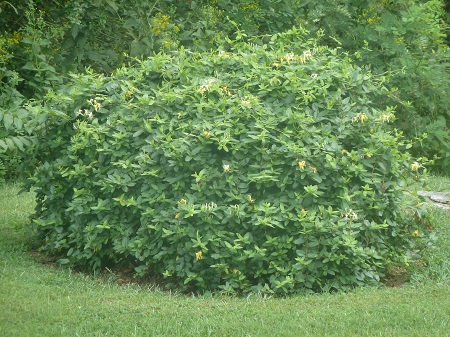
Up a Stump--honeysuckle-covered stumpWith one stump, I let nature take control. Honeysuckle grew near it. I allowed the honeysuckle to keep growing. Now, it covers the stump and blooms all summer. Problem solved.

No longer stumped, I have a pretty stump.

Up a stump means a situation too big to manage.

I cannot solve the problem. I:

  • Have no choice
  • Must live with it

Patty gave the example of a young man who arrives 30 minutes late to work every day. If he is my sister’s son, I might feel up a stump – like I can do nothing.

What makes me feel up a stump may not make you feel that way.  

  • You may be comfortable firing your sister’s son.
  • I may feel comfortable with a problem you cannot manage.

Nothing leaves God up a stump. Rather than tying myself in knots or becoming a worry wart, I can take all my problems to God. So can you.

“A life devoted to things is a dead life, a stump; a God-shaped life is a flourishing tree” (Proverbs 11:28 MSG).

If you use up a stump and stumped, do you mean the same? Please comment below.

Do you have an expression you want explained or a thought about this one? If so, please comment below.

Subscribe to receive my weekly posts by email and receive a free copy of “Words of Hope for Days that Hurt.”

If you enjoyed this post, please share it with your friends.

You Can’t Squeeze Blood from a Turnip

You Can’t Squeeze Blood from a Turnip

You Can't Squeeze Blood from a Turnip--basket of turnipsYou can’t squeeze blood from a turnip means something is extremely hard to do.

You may also hear:

  • It is like getting blood from a turnip.
  • You can’t draw blood from a turnip.
  • It is like getting blood from a stone.

All usually deal with efforts to get money or information from someone.

 The person:

  • Has what we need but will not share or help
  • Or has little or no money or information

Often a person has a bill but no way to pay it.

A few businesspeople understand. Others do not.

During my social work years, a doctor cared for a couple and their children. One day we discussed their many needs. The doctor said, “You can’t squeeze blood from a turnip.” He knew the family was poor as a church mouse. They would probably never be able to pay his bill.

However, the doctor continued to treat the family. He also gave them the same respect he gave everyone else. The family paid him $1 every month. He admired their effort to pay what they could.

You can’t squeeze blood from a turnip. You can treat everyone with respect.

 Count your blessings. Then share those blessings with others.

“Whoever oppresses the poor shows contempt for their Maker, but whoever is kind to the needy honors God” (Proverbs 14:31 NIV).

Thanks to Rhonda Wade Royster for the suggestion.

Do you have an expression you want explained or a thought about this one? If so, please comment below.

Subscribe to receive my weekly posts by email and receive a free copy of “Words of Hope for Days that Hurt.”

If you enjoyed this post, please share it with your friends.

That’s Life

That’s Life

That's Life-tree with hard lifeWe can’t control everything in our lives.

  • Both good and bad happen.
  • We celebrate, and we mourn.
  • Everything can change in an instant.

That’s life.

This tree reminds me of life. All wrapped together, we see:

  • Healthy limbs
  • Dead limbs
  • Missing limbs
  • Injured limbs
  • Other plants pulling life from it

The poor tree, a victim of many storms, looks terrible. Yet, it stands. It:

  • Continues to grow
  • Refuses to fall
  • Still offers shade to everything and everyone under it

We can control parts of our lives.

Like this lovely old tree, we may have suffered much.

  • We probably caused part of our pain.
  • Others may have hurt us.
  • Life storms often leave us scarred.
  • We feel in over our heads.

That’s life.

In spite of our suffering, will we choose to stand? Will we:

  • Stand tall
  • Continue to grow
  • Refuse to fall
  • Still offer help to those around us

Will we pick up the pieces of our lives, give them to God, and keep going?

Life and death
Struggles and scars
Beauty and ugliness
All wrapped together
That’s life.

“[God] comforts us in all our troubles, so that we can comfort those in any trouble with the comfort we ourselves receive from God” (2 Corinthians 1:4 NIV).

Do you have an expression you want explained or a thought about this one? If so, please comment below.

Subscribe to receive my weekly posts by email and receive a free copy of “Words of Hope for Days that Hurt.”

If you enjoyed this post, please share it with your friends.

Free and Clear

Free and Clear

Free and Clear--white houseIf we own something free and clear, it belongs to us.

We owe nothing for it. Many of us make house payments for years. After the final payment, our house belongs to us free and clear. That makes us feel free as a bird.

Sometimes we receive free and clear gifts.

We owe nothing for those gifts. They may come from:

  • Family
  • Friends
  • Neighbors
  • Anyone

Other times we give free and clear gifts.

When we hear of needs, we want to help. Therefore, we give and expect nothing in return.

We may also give for no special reason. We simply like to share.

Gifts may be large or small.

Many cost little or nothing, such as:

  • Notes
  • Crafts
  • Food
  • Flowers or vegetables from our gardens

People who sign up for my email list receive:

  • My weekly blog posts
  • News about my writing journey
  • Occasional gifts

The first email includes a link for a free copy of “Words of Hope for Days That Hurt.” I like to thank subscribers for their support. Small gifts help me do that.

God offers us the greatest gift of all.

“For it is by grace you have been saved, through faith—and this is not from yourselves, it is the gift of God” (Ephesians 2:8 NIV).

What free and clear gifts do you like to give?

If you enjoyed this post, please share it with your friends.

On the Back Burner

On the Back Burner

On the Back Burner--pans on a stoveWhen cooking, we often put pots of food that need little attention on the back burner.

They don’t require as much stirring, mixing, or other work. Those pots may also need less heat.

Likewise, we put ideas or plans on the back burner.

Some plans seem less important than others. Therefore, we:

  • Think less about them
  • Decide to do little or nothing about them until later

A few plans stay on the back burner a long time.

We may leave them there to simmer (slow cook) until the right time. However, we may simply want to avoid them. We are fixing to do them, but not now.

  • Cleaning carpets
  • Working on taxes
  • Pulling weeds

We cannot leave plans undone forever.

  • Food on low heat eventually burns.
  • Plans left undone eventually become a problem (including carpets, taxes, and weeds).

At some point, we must get the ball rolling.

A few plans should never go on the back burner.

“When you make a vow to God, do not delay to fulfill it” (Ecclesiastes 5:4 NIV).

Thanks to Carole Fite for the suggestion.

Do you have an expression you want explained or a thought about this one? If so, please comment below.

Subscribe to receive my weekly posts by email and receive a free copy of “Words of Hope for Days that Hurt.”

If you enjoyed this post, please share it with your friends.

Tangled Web

Tangled Web

Tangled Web--spider web“O what a tangled web we weave,
When first we practise to deceive!”

Those lines from Sir Walter Scott’s poem, “Marmion,” remain as true today as they were in 1808.

When we deceive others, life becomes difficult for them and for us.

  • They learn not to trust anything we say.
  • We must remember all the lies we told, so we can keep our stories straight.
  • Both of us become tied in knots.

A tangled web gets ugly.

Although we enjoy the beauty of a spider web, we do not enjoy getting tangled (trapped or twisted) in it. Flies and small bugs trapped in a web often become a spider’s dinner.

A tangled web confuses us.

We have a hard time getting out of the problems we cause. Like flies in a spider web, every way we move seems to tangle us worse. We cannot figure out what to do.

Although hard, we can escape our tangled mess.

Come clean. Life gets better when we tell the truth. The truth prevents a tangled web. The truth also leads us out of any web we weave.

When we follow God’s truth, we find our way to real freedom.

“Then you will know the truth, and the truth will set you free” (John 8:32 NIV).

Do you have an expression you want explained or a thought about this one? If so, please comment below.

Subscribe to receive my weekly posts by email and receive a free copy of “Words of Hope for Days that Hurt.”

If you enjoyed this post, please share it with your friends.

Thanks to Mary Lou Rafferty for the photo.

Fit to be Tied

Fit to be Tied

Fit to be tied-rope tied into a heart shapeMost of us have occasional fit-to-be-tied moments. We become:

  • Angry
  • Upset
  • Excited

We fly off the handle.

When fit to be tied, we get out of control.

Our emotions grow so great, we need someone to calm us down. No one actually ties us. However, they do try to:

  • Prevent anything we will regret
  • Keep us from hurting ourselves or someone else

We may grow fit to be tied for selfish reasons. 

  • When we don’t get our way
  • If our plans don’t work

We may also grow fit to be tied for unselfish reasons.

  • When someone abuses a child or older adult
  • If someone lies, steals, or hurts people in any other way

Little things often make us fit to be tied.

Some of us deal well with life’s big problems. Yet, we blow off steam when faced with small ones such as:

  • Slow traffic
  • Food spills on a clean floor
  • Noisy neighbors

God gave us emotions.

However, we want to use those emotions for good, not harm. How do we do that?

  • Recognize what upsets us.
  • Remember we can’t control everything.
  • Change what we can.
  • Ask for help when we need it.
  • Focus on what matters most.
  • Ask God to guide us and work through us.
  • Choose to love everyone, including those who make us fit to be tied.

“Don’t let your spirit rush to be angry, for anger abides in the heart of fools” (Ecclesiastes 7:9 HCSB).

Thanks to Pat Stapp for the suggestion.

Do you have an expression you want explained or a thought about this one? If so, please comment below.

Subscribe to receive my weekly posts by email and receive a free copy of “Words of Hope for Days that Hurt.”

If you enjoyed this post, please share it with your friends.

Pick-Me-Up

Pick-Me-Up

Pick-Me-Up, Flowers bloomingWe all need an occasional pick-me-up.

A bad mood or little energy leaves us down in the dumps. We feel too tired to move.

We need something to give us:

  • A better mood
  • Extra energy
  • A good rest

Flowers give some of us a pick-me-up. A field or garden full of flowers helps us remember the beauty of God’s creation.

A snack sometimes works. Although many of us like chocolate, the effect of food does not last long (except around the middle of our bodies).

A vacation helps. Yet, we may have to wait months for time off work.

Some of the greatest pick-me-ups require little work.

When we run out of steam, we can:

  • Take a few minutes to slow down. (Read a good book. Take a nap.)
  • Go for a short walk (or a longer one, if time allows).
  • Give or receive a few kind words. (If no one gives us kind words, we can still give ours.)

Pick-me-up moments matter.

They often turn bad days into good ones. They help us see light at the end of the tunnel. Go ahead. Make someone’s day!

May the God who gives endurance and encouragement give you the same attitude of mind toward each other that Christ Jesus had (Romans 15:5 NIV).

Thanks to J. T. Henderson for the suggestion.

What is your favorite pick-me-up? Please comment.

Subscribe to receive my weekly posts by email and receive a free copy of “Words of Hope for Days that Hurt.”

If you enjoyed this post, please share it with your friends.